Leadership is one of those words that gets used constantly but defined rarely. It shows up on LinkedIn profiles, in company values decks, and in job adverts for roles where “leadership experience” is listed right after “proficiency in Microsoft Office.” And yet, ask ten leaders what it actually means and you’ll get ten genuinely different answers.
We asked our community of female flex leaders what great leadership really looks like and their responses are a masterclass in leading with both head and heart.
Leadership Is a Team Sport
The most consistent theme across the community? Great leaders don’t lead alone. They build teams that are stronger than the sum of their parts, actively making space for others to step forward rather than holding the spotlight for themselves.

Louise Hattam
“A good leader has confidence in their own abilities while also recognising where others in the team may have greater strengths and can take the lead. Effective leadership is about understanding that success comes from a strong, collaborative team rather than individuals working in silos. The key traits I believe are essential in a leader are discipline, emotional intelligence, and perseverance”
Louise Hattam
There’s something quietly radical about a leader who is confident enough to step back. Confidence, here, isn’t about dominance, it’s about security. The secure leader doesn’t feel threatened when someone else in the room knows more. They feel relieved.

Melissa Ansley
“The best leaders inspire others to walk alongside them, instilling an unmistakable desire to be part of something. A great leader will surround themselves with expertise, seek it out, absorb it all, distil it, apply it, and communicate with clarity and conviction, elevating both process and outcome for all.”
Melissa Ansley
Hannah Mojica takes this a step further, arguing that one of the most underrated leadership skills isn’t vision or strategy, it’s the ability to translate.

Hannah Mojica
“For me, leadership starts with listening. You spend a lot of time translating between different personalities, different levels of the organisation, and sometimes completely different ways of thinking. We can get caught up in jargon, acronyms and whatever the latest trend is, however, one of the most valuable things a leader can do is simplify. If people understand what we’re trying to achieve and why, they can do great work. Also, you don’t need to have all the answers. The real strength is building a team of smart people around you and then creating an environment where they can thrive and deliver their best work.”
Hannah Mojica
Organisations are full of people speaking entirely different languages. You have the finance brain and the creative brain, the visionary and the operator. The leader who can move between those worlds fluently isn’t just useful. They’re essential.
Empathy Is a Core Skill
There’s a myth that empathy and strong leadership are somehow at odds. That warmth comes at the expense of effectiveness. But empathy isn’t a nice-to-have; it’s the foundation everything else is built on.

Amie Booth
“A good leader leads with empathy, humility, and honesty. It is about putting yourself in your team’s shoes, listening to their perspectives, and creating an environment where people feel respected and supported. Strong leaders are not afraid to admit when they are wrong and apologise when needed. Kindness and integrity go a long way in building trust and bringing out the best in people.”
Amie Booth
The willingness to apologise when wrong might sound like a small thing, but in practice it’s enormous. It signals to a team that accountability flows in all directions and that the leader isn’t exempt from the standards they set for others.

Paloma Strelitz
“A great leader in the flex industry is someone who can bridge creative vision with operational excellence. At Patch, we believe leadership requires empathy, really listening to the needs of our communities, paired with the discipline to deliver a high-quality and meaningful ‘Work Near Home’ experience. It also takes determination to create a network that can scale whilst ensuring that each of our spaces has a distinctive DNA, experienced through design, community, team, and programming.”
Paloma Strelitz
Empathy without rigour can become woolly good intentions. Discipline without empathy can become a results-at-all-costs culture that burns people out. The leaders who manage to hold both simultaneously are the ones who build something that lasts.
Lead With Values, Not Just Vision
Strategy matters, but values matter more. When circumstances are complex and the path forward is unclear, it’s principles, not plans, that keep a leader and their team anchored.
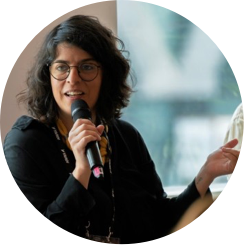
Ana Bernardo
“Leadership, for me, is about responsibility. Not just for decisions, but for the environment we create for the people around us: the culture, the standards and the way we show up for each other day to day. At its best, leadership is stewardship across different dimensions: looking after the people, the culture and the community. Leadership must be grounded in values. When you’re clear about the principles that guide you, your decisions become consistent, even when circumstances are complex. Those principles shape how we celebrate progress, how we navigate change and how we support one another through both. The traits I come back to most often are courage, honesty and empathy.”
Ana Bernardo
Many leaders are clear on the what (the goals, the metrics, the milestones) but less clear on the why and the how. Ana is pointing to something more fundamental: when you know your principles deeply, the decision in front of you often becomes easier, because you already know what kind of leader you’re trying to be.

Jo Mapp
“In terms of my thoughts on leadership, I have always been a big believer in leading by example. As a leader, people watch how you respond to situations more than you realise. Live and work the same way you teach others. Be open and build trust. Empower people.”
Jo Mapp
Every reaction you have, to setbacks, to difficult news, to conflict, is data that your team is quietly collecting and using to calibrate their own behaviour. Leading by example isn’t a slogan. It’s a constant practice.
The Leadership Challenges Nobody Warned You About
Ask any leader about their journey and they’ll tell you the textbook version: the frameworks learned, the strategies deployed, the milestones hit. Ask them what they weren’t prepared for, and the conversation gets a lot more honest. The women in the flex community didn’t hold back when we posed that question.
The Weight of Showing Up Strong When You’re Not
Leadership has a performance element that no one really talks about. The expectation to project calm, stability, and confidence, even when things are far from calm behind the scenes, is one of the most quietly demanding aspects of the role. For many leaders, the gap between how you feel and how you need to show up can be significant.

Georgia-Kaye Berry
“Being the backbone of a team while navigating my own challenges behind the scenes. Leadership often means showing stability even when things aren’t easy personally. Thankfully, I can brave face my way through just about anything, but when people rely on you there’s added pressure. It’s definitely taught me the value of resilience and having your own support system. Nothing is ever too hard, it’s just unfamiliar. Imposter syndrome can make you feel like you’re not ready, but if an opportunity is offered to you, it’s because someone sees your potential. Say yes anyway, back yourself, and treat every challenge as a learning curve!”
Georgia-Kaye Berry
Leading Through the World Around You
In recent years, the boundaries between the workplace and the wider world have blurred considerably and leaders are increasingly expected to navigate both. Whether it’s social upheaval, geopolitical uncertainty, or moments of collective anxiety, teams look to their leaders for something that no job description ever quite captures: a human response.

Anna Levine
“No one prepared me to lead through national and global social and geopolitical upheaval. What do you do when a team is looking to you as a business leader for guidance on real world issues that are affecting us all? How do you lead when you yourself are feeling angst about things going on outside of your business? My advice: When I’m deciding how to write an email, how to speak to my team, how to handle a tricky member situation, I think to myself “what do I really think about this in my heart of hearts? How would I talk about this thing if I were talking to a friend?” And then I try to act / speak / write in line with that, rather than starting with what I think the business point of view and language would be.”
Anna Levine
The Credibility Tax
For women in commercial property and flex, one of the most consistent unspoken challenges is the credibility gap. The extra work required to be taken as seriously as peers who receive that trust automatically. It’s exhausting, it’s unfair, and yet many women have turned it into the very thing that makes them exceptional leaders.
Georgia Sandom
“Running a flex office business isn’t just about operations or profits, it’s about people. You’re responsible for teams, clients, communities, and sometimes their livelihoods. No one really prepares you for how often you’ll have to make tough decisions while still showing empathy and maintaining trust. Another challenge is learning to navigate credibility early on. In industries like commercial property, which have historically been male-dominated, you sometimes have to prove your expertise before you’re given the same automatic trust others receive. It forces you to develop confidence, resilience and a very clear voice as a leader. Owning your expertise early is important, and you should not wait until you feel completely ready before speaking up or taking on leadership opportunities, because confidence often develops through action rather than beforehand.”
Georgia Sandom
The Takeaway
Great leadership isn’t a single trait or a personality type. It’s a combination of things: confidence enough to make space for others, empathy grounded in real listening, values that hold steady when the plan doesn’t, and the resilience to keep showing up even when no one sees how hard that is.
There’s no course that fully prepares you for it. But there is a great deal of wisdom to be found in people who are living it, learning from it, and generous enough to share what they know. That, in itself, is a kind of leadership.
Recent articles
Out of Spec: Women in Flex Who Don’t Fit the Mould
The flexible workspace industry prides itself on inclusivity, but gender stereotypes, expectations around women in leadership, and feelings of inadequacy…

Meet the Ambassador: Maria Bichl
With more than 15 years of international marketing experience across hospitality, tech, and real estate, Maria brings a unique blend…
You Don’t Need All the Answers: Women in Flex on What Great Leadership Actually Looks Like
Leadership is one of those words that gets used constantly but defined rarely. It shows up on LinkedIn profiles, in…